Where AI creates value — and where it doesn’t
A grounded view of where AI investments succeed, fail, or stall due to unresolved business constraints. AI amplifies what already exists—clarity or confusion, discipline or entropy, alignment or fragmentation.
AI doesn’t create value in isolation
Organizations that see sustained returns from AI tend to resolve foundational business questions before introducing advanced technology. Those that do not often experience stalled pilots, low adoption, or compliance risk disguised as innovation.
Key insight
AI accelerates decision velocity and scale. If decisions are already misaligned, opaque, or poorly governed, AI will magnify those failures faster and at greater cost.
Discovery starts with understanding the system
Before selecting models, platforms, or vendors, effective AI programs begin with structured discovery. The goal is not to ask “Where can we use AI?” but rather “Where does our operating model constrain or enable intelligent automation and decision support?”
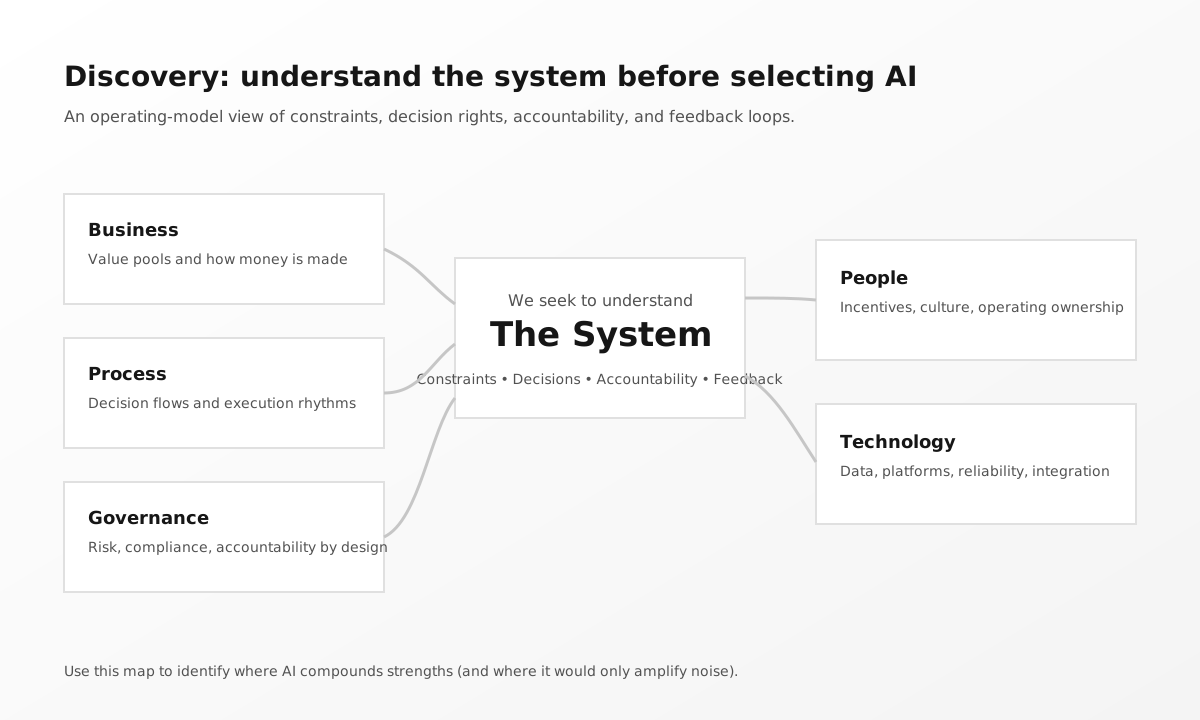
Discovery lens: current state vs. desired state
| Discovery area | Current state (observed) | Desired state (AI-ready) |
|---|---|---|
| Business | Value propositions are diffuse; success metrics are lagging or purely financial; AI framed as cost reduction. | Clear economic drivers and value pools; AI tied to revenue, margin, risk reduction, or cycle-time compression. |
| Process | Decisions are informal, inconsistent, or person-dependent; limited feedback loops. | Decision rights and workflows are explicit; feedback loops enable learning and continuous improvement. |
| Governance | AI ownership unclear; policies lag adoption; compliance treated as afterthought. | Defined model ownership and auditability; risk, legal, and security embedded early in design. |
| People | AI perceived as threat or novelty; incentives misaligned; skills isolated to a single team. | Cross-functional ownership; incentives reward adoption and outcomes; leaders understand tradeoffs and limits. |
| Technology | Fragmented data and integration gaps; automation layered onto brittle systems; vendor-led experimentation. | Fit-for-purpose platforms; reliable data foundations; AI applied selectively where it compounds strengths. |
Where AI investments are destined to fail
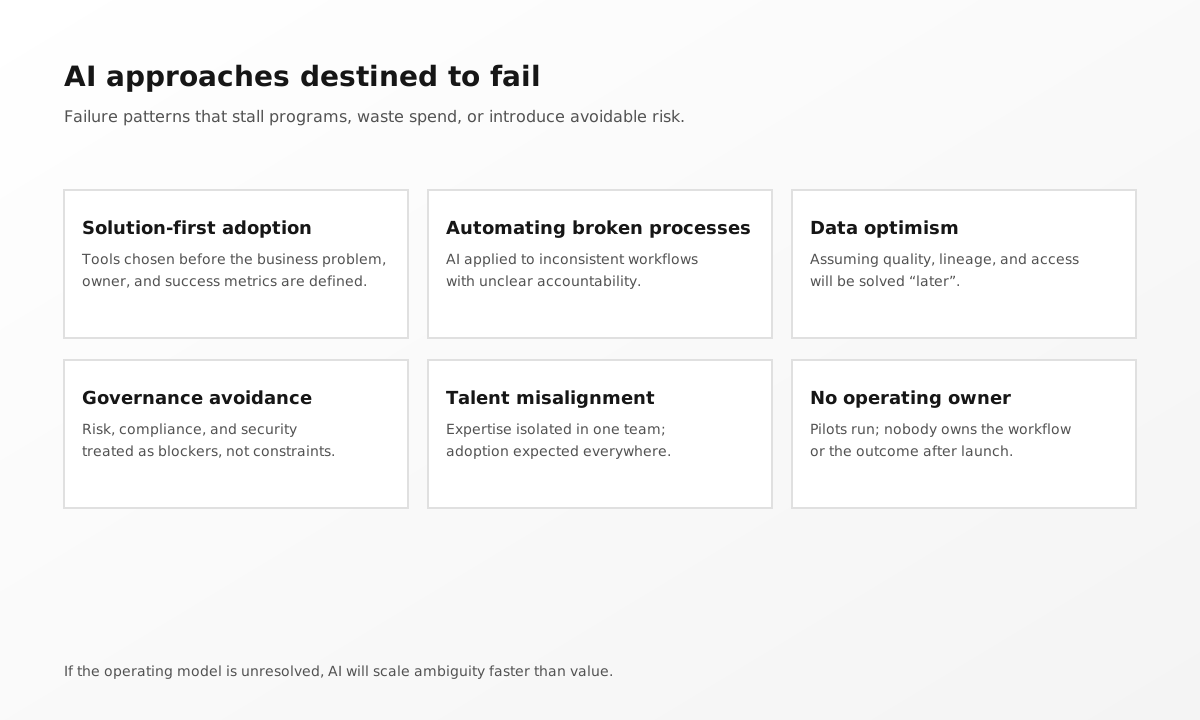
Despite rapid advances in models and tooling, failure patterns are remarkably consistent. AI initiatives tend to stall when they are introduced as substitutes for strategy, leadership, or operating discipline.
- Solution-first adoption: tools chosen before the business problem, owner, and success metrics are defined.
- Automating broken processes: AI applied to inconsistent workflows with unclear accountability.
- Data optimism: assuming quality, lineage, and access will be solved “later”.
- Governance avoidance: risk, compliance, and security treated as blockers rather than constraints.
- Talent misalignment: expertise isolated in one team while enterprise-wide change is expected.
Practical takeaway
AI creates durable value only when it reinforces a coherent operating model. A disciplined discovery phase is the highest-ROI investment in any AI initiative because it ensures AI scales judgment rather than confusion.
Failure-mode reference
Most breakdowns are operational—not technical. Use this diagram to pressure-test whether a proposed AI initiative has an owner, a defined workflow, and the governance needed to safely scale.